Newsletter
Spring 2013 Newsletter: Self-Reformation, The Mediterranean Diet Study, and other Stuff.
A couple years ago a thoughtful man, who had reason to want the answer, asked me what I thought the position and future of Ayurveda is and will be in the West. It was not exactly a new question but, perhaps due to the mysterious potency of Timing, I absorbed it into a deeper part of my consciousness than it had been hanging out in, and let it sit there for …well, since then.
I’ve been feeling the answer pretty clearly lately. It is what I have known, but the answer is clearer and gaining momentum. Ayurveda is the most elegant, inspiring, practical vehicle I know for self-reformation. My teacher once said, “Wanted: Reformers of self, not of others.” While I recognize that very statement perhaps aims to reform others—by inspiring them to be involved in their own reformation, the spirit is true.
If we aim to reduce the ridiculous spending on healthcare, its absurd cost, and reduce the incidences of obesity, heart disease, diabetes, cancer and other lifestyle-and-diet-related epidemics, there is no alternative outside of mass self-reformation.
Only through self-reformation can we really achieve preventative healthcare. Early detection is not preventative medicine. The simple fact that there is something to detect proves that the problem was not prevented. In many cases, real prevention lies in diet and lifestyle. And that is on each one of us.
We each need to practice what we know is good for our health. It’s not brain surgery. But stuff can be simple and still be hard, right? It’s hard to make healthy lifestyle changes. It’s hard to know what to do in a sea of information and misinformation. And it’s hard to then do it.
We generally need a health care practitioner or consultant to point us in the right direction. And we often need supportive cheerleaders to keep us going in that direction. Our healthcare person can cheerlead us but sometimes we receive equal or more powerful support, from a community (even a small one) of people aiming for the same stuff we are.
Although there are many indigenous traditions that treat ailments with herbal or other “natural” remedies, it has been my experience that Ayurveda is the most elegant at explaining and addressing health through lifestyle and dietary considerations and practices. While there is a need for health care practitioners trained in Ayurveda, ultimately we all need to be practitioners, in the sense that we each need to practice what we preach, learn or know—health care practitioners and patients alike.
But this is all stuff you all probably already know. Hardly a newsflash. Have no idea why I’m excited about this very “duh” sort of thing this morning.
Well, maybe I have some idea. I’m really inspired lately by the (what I see as a) growing number people who are actually changing their lives. And the changes are reflected in their bodies and on their faces and in the way it feels to interact with them. We are soooo close to, (or possibly have even arrived at?) a tipping point. I feel the momentum and excitement created by the pleasure and joy of health and sanity is beginning to outweigh our attachment to the very transient joy we get from habits and lifestyles that cause us pain.
I saw this in our most recent run of the Healthier Hormones course and felt such an upsurge of appreciation, gratitude, even relief, that many of us are aligning our actions with our knowledge and intentions. Feels fantastic.
And, more than ever before, it is possible to find practitioners of Ayurveda who have sufficient education to offer lifestyle and diet consultations.
It is at this point that I could wrap this up tidily with a, “So, this Spring, why not live up to what you know” kind of preachy thing. But I think I’ve said what was really in my heart and that would just be trying to wrap this up tidily.
Instead, I mean now to address four things: a retreat, a book, a rebuttal, and my response to the Mediterranean Diet Study that recently came out:
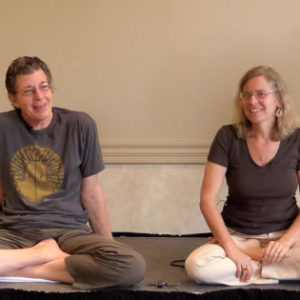
- The Retreat: I want to mention one, probably last time—at least in the newsletters—about the inaugural Balanced Life Retreat with me, with world-class yoga practitioner, Sama Fabian, and the angelically-voiced Caroluna, this coming May 17-22 at Stoweflake Mountain Spa & Resort, in Stowe, VT. We are coming together to be practitioners together, both of what we know and what we will learn. I won’t blab more than 4 hours per day, we will have yoga each morning and vocal meditations and exercises each afternoon and have an intimate time reforming ourselves together. At least, that is my expectation, and I am enthusiastically looking forward to this time. If you want to register or need more information, contact .
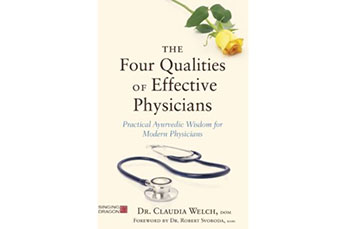
- The long awaited book: “Vastu: Breathing Life Into Space”, by my dear friend and colleague, Dr. Robert E. Svoboda , is now available. Vastu Shastra is India’s equivalent of China’s Feng Shui, the art of geomancy. If you tend to be interested in Indian sciences and philosophies, are interested in Feng Shui, or have enjoyed Dr. Svoboda’s 347 other books (okay, maybe there’s only about 13 of them but, if you’ve ever written even one, it is hard to imagine how someone can write that much), then this may well be an excellent addition to your collection.
- The Rebuttal. Perhaps you’ve seen Mr. William Broad’s articles, or his new book, on the risks and rewards of yoga. I would like to say it is a thoughtful look at the actual risks and rewards but, actually, his conclusions are controversial. If you or your students have been scared out of yoga on account of his claims, it may be helpful to consider this careful rebuttal by Dr. Timothy McCall, author of Yoga as Medicine. Maybe don’t throw out your yoga mat just yet.
Finally, The Mediterranean Diet thing: Remember the Mediterranean Diet? Lots of veggies and fruits and whole grains and beans and olive oil, nuts, fish, some wine (if you already drink) with some meals, etc? Well, in February, the New England Journal of Medicine reported the results of a study titled, Primary Prevention of Cardiovascular Disease with a Mediterranean Diet.1 Participants were overweight, smokers, had diabetes, high cholesterol, high blood or other risk factors associated with heart disease. Many were already on medications for their conditions. They were encouraged to eat the Mediterranean diet and to avoid highly processed foods like packaged cookies, cakes and pastries, and to limit consumption of dairy products and processed meats.
The results? The army of researchers found a 30% reduction in heart attacks, strokes, and deaths. That’s a pharmacological effect. In other words, if a pharmaceutical drug could get those kinds of numbers in people at high risk for heart disease, that would be considered an effective drug. And its only side effects were positive, whereas pharmaceutical drugs come with unwanted negative side effects. The study was considered so successful that it was stopped before the scheduled five years, as it was considered unethical to continue, as then the people in the control group would not have the opportunity to change their diets as well.
This is all good news, (if it is, indeed, still news to us that eliminating processed food and eating a whole foods diet is good for the health), but I do want to point out a few things about it:
- It might be tempting to think that there is one part of this diet that is the magic bullet. It is not that olive oil is a miracle cure or that nuts are the medicine. It may simply be the whole package: a diet that consists of whole foods.
- This study looked at a diet that included many foods. There may be some foods that contributed more than others towards the outcome of this study. There may be other regimens or diets that have even better results. For example, Dr. Dean Ornish has treated heart disease with lifestyle, diet and meditation for…for just about ever…well, since the mid ‘70’s, and achieved remarkable results. He believes that cardiovascular disease, obesity and diabetes are “completely preventable in at least 95 percent of people just by changing diet and lifestyle.”2 His regimen is very anti-fat --including olive oil--in the diets he recommends to reverse heart disease. It is possible that the participants in this study may have done better on Dr. Ornish’s diet. We don't know. It could just be that the Mediterranean diet was a significant improvement over the group's previous diet, which included more processed foods.
- The olive oil used was extra-virgin, "polyphenol-rich olive oil instead of refined variety, which is low in polyphenols." This is important. If you consume crappy oil, the results may not be as good. To complicate matters, there was a study showing that 69% of olive oils marked as "extra virgin" were not. It seems most olive oils may be adulterated. If you are interested in how to test to see if your olive oil is really extra virgin, here's a good article.
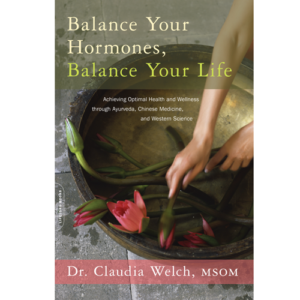
- Also worth noting is that, in the actual study guidelines (Table 1. Summary of Dietary Recommendations to participants in the Mediterranean-Diet groups and the control group diet group.”) the dietary guideline was, "wine with meals (optionally, only for habitual drinkers)[italics mine]." That means, if you were already a habitual drinker, then drink wine (instead of whatever else you may have been drinking), and consume it with your meals. It did not mean that everybody in the study had to drink wine. It would be a shame if people came away with the message that they should be drinking wine. That part may not have come across in the media’s reports. I guess it just sounds to prudish? The point is, we know (read the alcohol parts in Balance Your Hormones, Balance Your Life) the risks (especially cancer) associated with drinking alcohol. There is no need to trade one disorder for another.
Not sure when or where you will receive this. From my side, as I’m writing this, I have no internet, we’re a few days out from the full moon (Wednesday, 28 March, about 5:30am ET), Jupiter is visible in the early evening, an exalted Saturn is visible before sunrise. I woke yesterday morning to a snowstorm in Vermont (where it has been lightly snowing daily since about 1943). This afternoon, where I’m scheduled to teach, at the Sivananda Yoga Retreat in Nassau, Bahamas, I have a sunburn. It is the season of Passover, Holi, Easter, and probably other things. There is always something going on.
Chag Sameach, Holi Mubarak and Happy Easter :)
Hope you’re well.
Thanks for being there.
In Love,
cw
- 1 Primary Prevention of Cardiovascular Disease with a Mediterranean Diet Ramón Estruch, M.D., Ph.D., Emilio Ros, M.D., Ph.D., Jordi Salas-Salvadó, M.D., Ph.D., Maria-Isabel Covas, D.Pharm., Ph.D., Dolores Corella, D.Pharm., Ph.D., Fernando Arós, M.D., Ph.D., Enrique Gómez-Gracia, M.D., Ph.D., Valentina Ruiz-Gutiérrez, Ph.D., Miquel Fiol, M.D., Ph.D., José Lapetra, M.D., Ph.D., Rosa Maria Lamuela-Raventos, D.Pharm., Ph.D., Lluís Serra-Majem, M.D., Ph.D., Xavier Pintó, M.D., Ph.D., Josep Basora, M.D., Ph.D., Miguel Angel Muñoz, M.D., Ph.D., José V. Sorlí, M.D., Ph.D., José Alfredo Martínez, D.Pharm, M.D., Ph.D., and Miguel Angel Martínez-González, M.D., Ph.D. for the PREDIMED Study Investigators February 25, 2013DOI: 10.1056/NEJMoa1200303
- 2 Dr. Dean Ornish presentation at the TED conference, Monterey, CA. Feb 2006.